
Maxeda uses the QR code by GS1 as a multitool for digital product information
By the end of 2027, retailers worldwide will be able to scan the QR code by GS1. “At Maxeda, this is certainly already possible at the checkout,” says Kelly De Logi, Data Quality Manager at Maxeda. “In practical terms, this means that our checkout systems can scan the QR code by GS1 and retrieve the GTIN from it across all our stores,” she adds. Testing is still ongoing in the distribution centre. The technical details are currently being gathered to determine which software adjustments are still required.
Maxeda has not only taken the necessary steps at the checkout. The retailer is also actively exploring the possibilities for its private-label products.
Added value for consumers and retailers
According to Maxeda, the greatest added value of the QR code by GS1 lies in its ability to make much more information accessible than can fit on product packaging. This gives consumers easier access to product information, compliance data and other relevant information.
An additional advantage is that the digital information behind the QR code can be updated without having to change the code itself. This means that information can remain up to date throughout a product’s entire lifespan.
"The QR-code by GS1 can be scanned and the GTIN can be retrieved at all our point-of-sales."
For DIY products, which are often used for many years, this opens additional possibilities. Consumers can, for example, access assembly instructions, maintenance information, warranty details and information about spare parts whenever they need it.
New expectations
The role of product information is changing rapidly. New regulations, rising consumer expectations and the emergence of initiatives such as the Digital Product Passport mean that companies are required to make increasing amounts of information about their products available.
“In this context, we are exploring how the QR code by GS1 can develop into a standardised gateway to digital product information,” says Kelly. The first concrete applications are already becoming visible as part of preparations for the European Battery Regulation.
Battery Regulation as the first concrete use case
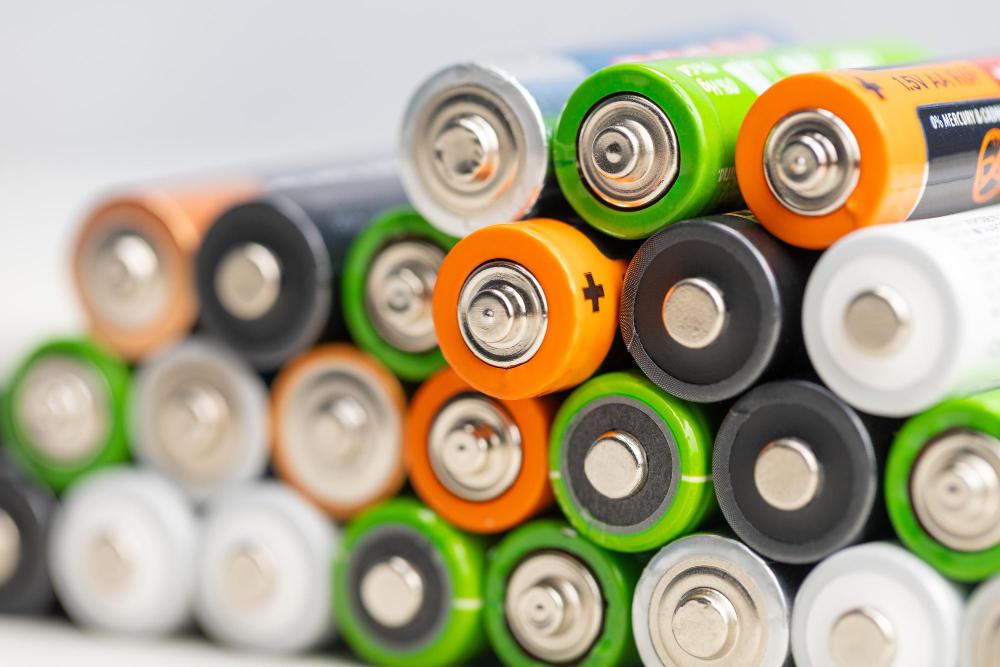
The most tangible application today is the European Battery Regulation. This legislation introduces QR code requirements for certain battery categories from 18 February 2027.
“We are currently collecting the required battery information through our import department, translating consumer-facing content into Dutch and French, and further preparing the digital information,” says Kelly. The aim is to make this information available through a landing page linked to a QR code by GS1 via GS1 Digital Link.
This approach gives consumers direct access to relevant product information without requiring all the data to be printed on the packaging.
The challenge: making more information available
For many products, the amount of information that needs to be available continues to grow. This includes user instructions, sustainability information, recycling instructions, warranty terms, spare parts and compliance data. However, product labels are not getting any bigger. “The QR code by GS1 is therefore the perfect extension for providing this information to consumers and public authorities,” says Kelly.
At the same time, regulations are evolving increasingly rapidly. Companies not only need to make information available, but also keep it up to date throughout a product’s entire lifecycle.
For a retailer such as Maxeda, this means finding a scalable and future-proof way to connect physical products with up-to-date digital content.
Relevance to the wider market
Although the Battery Regulation is currently the most concrete application, Maxeda also sees potential for many other uses. The company is exploring possibilities relating to product information, user instructions, sustainability information, recycling information, traceability, compliance information and future Digital Product Passports.
A foundation for future regulations
The Maxeda case shows how the QR code by GS1 is increasingly evolving from a means of identification into a gateway to digital product information. By already testing and developing concrete use cases today, the retailer is preparing for future regulations and changing expectations around transparency and sustainability.
For the whole sector, this illustrates the growing importance of standardised identification and digital information exchange. As regulations such as the Battery Regulation and future Digital Product Passport initiatives continue to take shape, the QR code by GS1 could become an important link between physical products, reliable product data and consumers.