How VARO is structurally working towards complete and reliable product data through GS1 standards
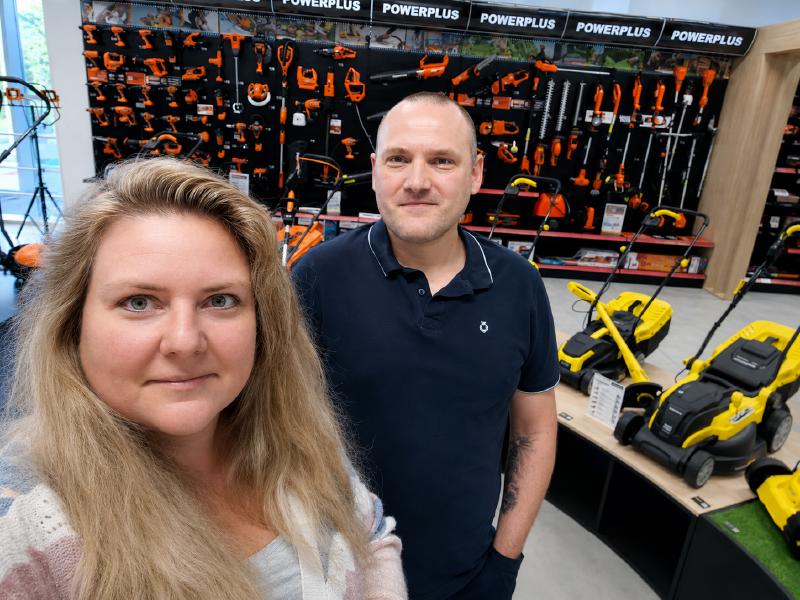
Product data is becoming increasingly central to collaboration between suppliers and retailers. Retailers expect product information to be complete, accurate and available on time, while suppliers are faced with increasingly complex data models and stricter requirements. Within this context, VARO, active in the DIY sector, decided to fundamentally rethink its approach to product data. The result is a structured way of working that today leads to an almost complete and consistent publication of product data through GS1. Charis Roose and Raf Van Haver explained how the journey towards a 100% validation score in My Product Manager evolved and how they intend to maintain this score.
VARO and product data in a retail context
VARO supplies a wide range of products to, among others, the DIY sector. Like many other suppliers, the company worked reactively for a long time: product data was completed when requested by a retailer or when an item had to be sold. This approach resulted in fragmented information, incomplete attributes and repeated correction work. “With the growing role of GS1 data in e-commerce, logistics and omnichannel processes, it became clear that this approach was no longer sufficient,” says Charis.
The challenge: completeness, structure and responsibility
“The biggest challenge for us was not one technical issue, but a combination of factors,” Raf explains. Data fields had historically been created in an ad hoc manner; product groups were not always correctly classified and responsibilities regarding data quality were not clearly defined. As a result, errors occurred in the mapping to the GS1 data model and publication delays arose. In addition, data was often reviewed on an item-by-item basis, causing structural issues to keep recurring.
GS1 as a framework for structured product data
GS1 provided VARO with a clear framework to structure and standardise product data. By working with the GS1 data model and publication through GS1, VARO was able to share product information with retailers in a uniform way. “The use of GS1 tools, such as simulation reports, also made it possible to detect future changes in the data model in advance and respond proactively,” adds Charis. In this context, GS1 did not act as a control mechanism, but as a common language between suppliers and data recipients.
From item-by-item to group-based approach
One of the most important changes was the decision to stop working on an individual item basis and instead work by product group. Today, VARO first analyses an entire product group and ensures that all required data fields for that group are correctly completed. Only then are the products published. This approach initially requires more time. However, it prevents the same products from having to be adjusted multiple times. The focus therefore shifts from quick fixes to structural solutions.
Clear workflows and ownership
In addition to the content structure, the internal workflow was also redesigned. Products go through fixed phases in the PIM system, involving different departments such as purchasing, marketing and packaging. “Internal technical blocks ensure that products only become available for sale once all mandatory data is present,” says Charis. Crucial in this process is the principle of ownership: the data department monitors completeness and only publishes once all conditions have been met. Exceptions are deliberately avoided.
Concrete results in practice
Thanks to this structured approach, almost the entire VARO assortment is now correctly and completely available in GS1. Retailers need to request additional information less frequently and internal departments can rely on one central source of product data. “Because the foundation is now in place, there is also room to further improve data quality and content accuracy, not just completeness,” Charis explains.
Broader importance for suppliers and retailers
VARO’s experience illustrates a broader evolution within the sector. Product data is no longer an administrative side issue, but a strategic component of collaboration throughout the supply chain. Standardisation through GS1 makes it possible to better align expectations between suppliers and retailers. At the same time, the case highlights the importance of communication: unclear attributes or product groups are not bypassed instead actively fed back to enable structural improvements.
Towards sustainable data collaboration
The VARO case demonstrates that high data completeness is not an end goal, but a foundation. By investing in structure, clear responsibilities and proactive use of GS1 standards, the company is building sustainable data collaboration with its partners. Their proactive approach also means that VARO intends to continue striving for 100%, even when adjustments are made to the data model. In a context of increasing digitalisation and transparency, this approach is becoming ever more relevant for the entire retail and supply chain sector.